
In today’s fast-paced world, the ability to read quickly has become increasingly valuable. You may find yourself inundated with information from various sources, whether it’s emails, reports, or articles. The sheer volume of material can be overwhelming, and if you’re not able to process it efficiently, you risk falling behind.
Reading faster allows you to absorb more information in less time, enabling you to stay informed and make better decisions. It can enhance your productivity, allowing you to allocate time to other important tasks or leisure activities. Moreover, reading faster can significantly improve your learning capabilities.
When you can consume information quickly, you can engage with more content, which can lead to a deeper understanding of subjects that interest you. This skill is particularly beneficial in academic settings or professional environments where knowledge retention is crucial. By mastering the art of speed reading, you empower yourself to tackle complex materials with ease, ultimately enhancing your overall intellectual growth.
Key Takeaways
- Reading faster can save time and improve productivity
- Your current reading speed can be determined through various online tests
- Techniques for increasing reading speed include using a pointer and minimizing subvocalization
- Improving comprehension while reading faster can be achieved through active reading and practicing mindfulness
- Overcoming subvocalization is essential for increasing reading speed and comprehension
Identifying Your Current Reading Speed
Before embarking on your journey to read faster, it’s essential to assess your current reading speed. You can do this by selecting a passage of text and timing yourself as you read it. Count the number of words in the passage and divide that by the time it took you to read it in minutes.
This will give you a baseline reading speed in words per minute (WPM). Understanding where you currently stand will help you set realistic goals for improvement. Once you have your baseline, consider how your reading speed compares to average rates.
Most adults read at a speed of about 200 to 300 WPM with decent comprehension. If you find that your speed falls below this range, don’t be discouraged; this is simply a starting point. Recognizing your current capabilities allows you to track your progress as you implement new techniques and strategies for increasing your reading speed.
Techniques for Increasing Reading Speed

There are several techniques you can employ to enhance your reading speed effectively. One popular method is the use of a pointer or your finger to guide your eyes along the lines of text. This technique helps minimize distractions and keeps your focus on the material at hand.
By following the movement of your finger, you can train your eyes to move more swiftly across the page, reducing the tendency to pause unnecessarily. Another effective strategy is chunking, which involves grouping words together rather than reading them individually. Your brain is capable of processing multiple words at once, so by training yourself to recognize phrases or clusters of words, you can significantly increase your reading speed.
Start by practicing with short sentences and gradually work your way up to longer passages as you become more comfortable with this technique.
Improving Comprehension while Reading Faster
While increasing your reading speed is important, it’s equally crucial to maintain comprehension. You may worry that reading faster will compromise your understanding of the material, but with practice, you can achieve both speed and comprehension. One way to enhance comprehension is by previewing the material before diving in.
Skim through headings, subheadings, and any highlighted text to get a sense of the main ideas and structure. Additionally, consider taking brief notes or summarizing key points as you read. This active engagement with the text reinforces your understanding and helps retain information better.
You might also try discussing what you’ve read with others or teaching the material to someone else; this reinforces your comprehension and solidifies the knowledge in your mind.
Overcoming Subvocalization
Subvocalization—the habit of silently pronouncing words in your head as you read—can significantly slow down your reading speed. While it’s a natural part of the reading process for many people, it can hinder your ability to read quickly. To overcome subvocalization, try focusing on visualizing the content instead of pronouncing each word mentally.
This shift in approach allows you to absorb information more rapidly without getting bogged down by internal dialogue. Another technique to combat subvocalization is to consciously increase your reading pace. Challenge yourself to read slightly faster than your comfort zone; this will force you to rely less on subvocalization and more on visual recognition of words and phrases.
With consistent practice, you’ll find that you can read without the need for internal pronunciation, leading to a more fluid reading experience.
Eliminating Regression and Backtracking
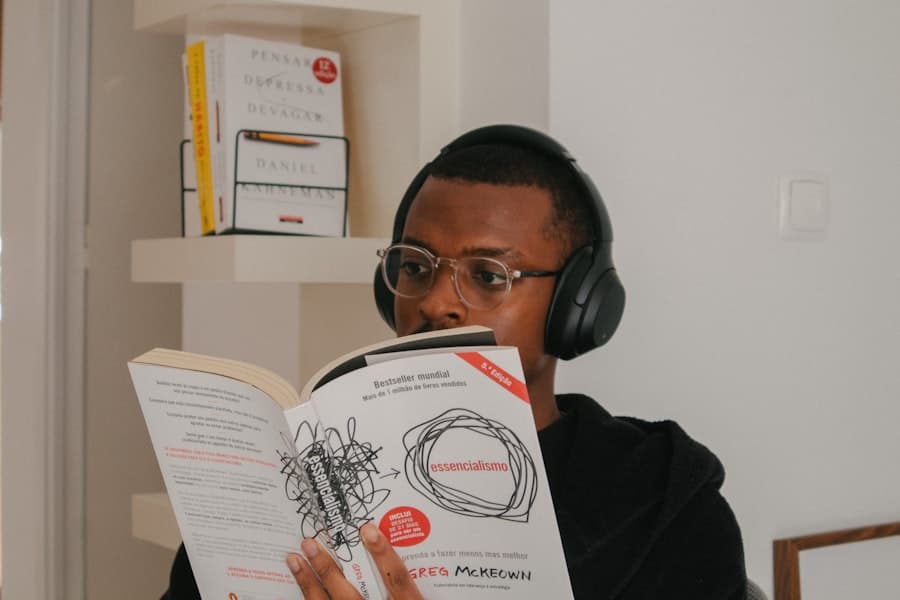
Regression—the act of going back to reread text—can be a significant barrier to improving your reading speed. Many readers instinctively return to previous sentences or paragraphs when they feel they haven’t fully grasped the content. To eliminate this habit, consciously train yourself to move forward without looking back.
One effective method is to set a timer while reading; this creates a sense of urgency that encourages you to keep progressing through the material. You might also try using a pointer or guide as mentioned earlier; this can help keep your eyes moving forward rather than backtracking. Additionally, remind yourself that it’s okay not to understand every single detail on the first pass.
Focus on grasping the main ideas and themes instead; if something is unclear, make a note of it and revisit it later if necessary.
Utilizing Peripheral Vision
Your peripheral vision plays a crucial role in enhancing your reading speed. By training yourself to utilize this aspect of vision, you can take in more words at once without fixating on each individual word. To practice this technique, try widening your gaze as you read; instead of focusing solely on the center of the text, allow your eyes to take in surrounding words and phrases.
You can also practice reading larger blocks of text rather than individual lines. This approach encourages your brain to process information more holistically rather than getting caught up in minute details. As you become more comfortable with this technique, you’ll find that your reading speed increases naturally while maintaining comprehension.
Practicing Mindfulness and Focus
In an age filled with distractions, cultivating mindfulness and focus is essential for improving your reading speed. When you sit down to read, create an environment conducive to concentration—eliminate distractions such as phones or background noise that may interrupt your flow. Consider setting aside dedicated time for reading where you can immerse yourself fully in the material without interruptions.
Mindfulness techniques such as deep breathing or meditation can also enhance your focus while reading. By calming your mind and centering your thoughts before diving into a text, you’ll find it easier to engage with the material and absorb information quickly. Practicing mindfulness regularly will not only improve your reading speed but also enhance your overall cognitive abilities.
Implementing Skimming and Scanning Techniques
Skimming and scanning are two valuable techniques that can help you navigate texts more efficiently. Skimming involves quickly glancing through a text to get a general idea of its content without delving into every detail. This technique is particularly useful when you’re trying to determine whether a piece of writing is relevant or worth a deeper read.
On the other hand, scanning involves searching for specific information within a text—such as keywords or phrases—without reading every word in between. This technique is especially helpful when you’re looking for particular data or answers within larger documents. By mastering both skimming and scanning techniques, you’ll be able to navigate through texts more effectively and efficiently.
Setting Realistic Reading Goals
As with any skill development, setting realistic goals is crucial for success in increasing your reading speed. Start by establishing short-term goals that are achievable within a specific timeframe—such as increasing your reading speed by 50 WPM over a month. These smaller milestones will help keep you motivated and provide a sense of accomplishment as you progress.
Additionally, consider tracking your progress regularly; this could involve reassessing your reading speed every few weeks or noting improvements in comprehension levels as well. By celebrating small victories along the way, you’ll maintain enthusiasm for developing this valuable skill while ensuring that you’re on track toward achieving long-term goals.
Finding a Reading Faster Course in Frisco, TX
If you’re serious about enhancing your reading speed and comprehension skills, consider enrolling in a dedicated course designed for this purpose. In Frisco, TX, there are various programs available that cater specifically to individuals looking to improve their reading abilities. These courses often provide structured lessons and expert guidance tailored to different learning styles.
When searching for a course, look for one that offers practical exercises and personalized feedback from instructors who specialize in speed reading techniques. Engaging with fellow learners can also provide motivation and accountability as you work toward achieving your goals together. By investing time in a quality program, you’ll be well on your way to becoming a more efficient reader capable of tackling any material with confidence and ease.
FAQs
What is the How to Read Faster Course in Frisco, TX?
The How to Read Faster Course in Frisco, TX is a program designed to help individuals improve their reading speed and comprehension through various techniques and strategies.
What are the benefits of taking a How to Read Faster Course?
Some of the benefits of taking a How to Read Faster Course include improved reading speed, enhanced comprehension, better retention of information, and increased efficiency in academic and professional settings.
Who can benefit from a How to Read Faster Course?
Anyone looking to improve their reading skills, whether for academic, professional, or personal reasons, can benefit from a How to Read Faster Course. This includes students, professionals, and avid readers.
What can I expect to learn in a How to Read Faster Course?
In a How to Read Faster Course, participants can expect to learn various speed reading techniques, strategies for improving comprehension, methods for increasing reading efficiency, and tips for retaining information.
How long does a How to Read Faster Course typically last?
The duration of a How to Read Faster Course can vary, but it typically ranges from a few hours to a few days, depending on the depth of the material covered and the specific curriculum of the course.
Are there any prerequisites for taking a How to Read Faster Course?
Most How to Read Faster Courses do not have specific prerequisites, and individuals of all reading levels and abilities are welcome to participate. However, some courses may require a basic level of reading proficiency.


