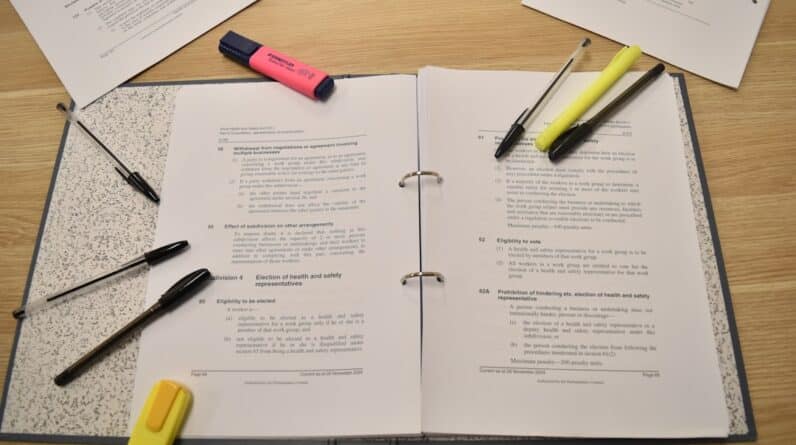
You stand at the precipice, the looming specter of exams casting a long shadow over your academic journey. This isn’t just about memorizing facts; it’s a strategic campaign, a meticulous dissection of curriculum, a honing of your intellectual arsenal. For those in Hardin Village, Texas, the pursuit of exam readiness is often intertwined with the unique resources and environment this community offers. This guide aims to equip you with the knowledge and practical steps to conquer the challenges that lie ahead, turning the daunting task of exam preparation into a surmountable, and perhaps even rewarding, endeavor. Think of this as your map, your compass, and your sturdy boots for the expedition into the heart of exam mastery.
Understanding the Terrain: Your Academic Landscape
Before embarking on any journey, it’s crucial to understand the terrain you’ll be traversing. Your academic landscape is defined by the subjects you need to master, the specific learning objectives outlined by your instructors, and the format of the exams themselves. Hardin Village, while a specific locale, doesn’t necessarily dictate a universally unique approach to academic assessment, but rather grounds it in the practical realities of your immediate environment and the educational institutions you attend.
Mapping Your Curriculum: The Blueprint for Success
Your curriculum is the foundational blueprint upon which your entire exam preparation strategy must be built. It’s not merely a list of chapters; it’s a carefully constructed edifice of knowledge, each brick a concept, each beam a principle.
Deconstructing Syllabi: Unveiling the Secrets
Your syllabus is your primary oracle. Treat it with the reverence of an ancient scroll. It contains the wisdom of your instructors, the learning objectives, the weighting of different topics, and the crucial dates. You need to dissect it, not as a passive recipient, but as an active investigator. Identify the core themes, the recurring concepts, and any topics your instructors have emphasized repeatedly. Think of it as finding the recurring motifs in a complex symphony.
Identifying Key Learning Outcomes: The Destination Markers
Learning outcomes are your destination markers. What specific skills or knowledge are you expected to demonstrate after completing a unit or course? These are the targets you must aim for. If an outcome states you should “analyze the causes of the Civil War,” then your preparation must involve deep analytical thinking about those causes, not just a superficial recounting of events.
Recognizing Exam Formats: The Weapons of Choice
Exams come in various forms, each demanding a different tactical approach. Multiple-choice questions test your recall and ability to differentiate between subtly different options. Essay questions probe your understanding, your ability to synthesize information, and your capacity for coherent argumentation. Problem-solving exams assess your application of principles and your analytical prowess. Knowing the format is like knowing the type of enemy you’re facing; it dictates the weapons you need to bring to the battlefield.
Identifying Your Strengths and Weaknesses: The Self-Assessment Phase
Honesty is your most potent tool in this phase. You are the sole surveyor of your intellectual landscape. Where are the fertile plains of understanding, and where are the barren deserts of confusion?
Self-Diagnostic Assessments: The Mirror to Your Mind
Many courses provide practice questions, quizzes, or past exams. These are not just optional exercises; they are critical self-diagnostic tools. Take them under timed conditions to simulate the actual exam environment. Analyze your performance not just by the score, but by the types of questions you got wrong. Was it a content gap, a misinterpretation of the question, or a lapse in concentration?
Seeking Feedback: The Objective Observer’s Counsel
Don’t be an island unto yourself. Approach your instructors and teaching assistants (TAs). Their objective perspective can be invaluable. Ask them for clarification on concepts you find difficult. Discuss your understanding of specific topics. They are not adversaries; they are guides, and their feedback is a lighthouse guiding you through foggy waters.
Cultivating the Garden of Knowledge: Effective Study Strategies
Once you understand your academic terrain and your own capabilities, it’s time to cultivate your knowledge. This is where the actual nurturing of understanding takes place, turning raw information into deeply ingrained comprehension.
Active Recall and Spaced Repetition: The Pillars of Retention
Passive reading is like watching a movie; active engagement is like directing it. Simply rereading notes or textbooks is often an illusion of learning; true learning requires active retrieval.
The Power of Flashcards and Self-Testing: Forging the Links
Flashcards are not just for vocabulary. Use them for concepts, definitions, formulas, and even timelines. The act of trying to recall the answer before flipping the card strengthens neural pathways. Spaced repetition, the practice of reviewing material at increasing intervals, is a scientific method to combat the natural forgetting curve. Websites and apps dedicated to spaced repetition can be powerful allies. Think of it as planting seeds at optimal times for maximum growth.
Summarization and Paraphrasing: Rebuilding the Structure
After reading a chapter or section, try to summarize it in your own words, without looking at the source material. This forces you to process and synthesize the information. Paraphrasing complex ideas demonstrates a deeper level of understanding than simply memorizing sentences.
Concept Mapping and Visualization: Weaving the Web of Ideas
Your brain thrives on connections. Concept mapping and visualization techniques help you build a rich tapestry of interconnected knowledge, rather than isolated threads.
The Art of Mind Maps: Charting the Interdependencies
A mind map starts with a central concept and branches out to related ideas, sub-ideas, and supporting details. This visual representation helps you see how different pieces of information fit together, revealing the underlying structure of your subject matter. It’s like building a branching family tree of your knowledge.
Creating Diagrams and Flowcharts: Illustrating Processes and Relationships
For subjects that involve processes, sequences, or causal relationships (like history, science, or computer science), diagrams and flowcharts are indispensable. They provide a clear, visual pipeline of information, making complex systems easier to grasp.
Practice Problems and Past Papers: The Dress Rehearsal
Theory is essential, but application is paramount. Solving problems and working through past exam papers is the closest you can get to the actual exam experience without sitting for it.
Simulating Exam Conditions: The Crucible of Reality
When working on practice problems or past papers, strive to replicate exam conditions as closely as possible. Set a timer, eliminate distractions, and resist the urge to consult your notes. This practice builds stamina and helps you manage your time effectively under pressure. It’s the rigorous training that prepares the athlete for the competition.
Analyzing Mistakes: The Sculptor’s Chisel
Every mistake is an opportunity for refinement. Don’t just note that you got a question wrong; understand why you got it wrong. Was it a factual error, a misunderstanding of a concept, or a careless calculation? Meticulously analyze each error, as if you were a sculptor identifying the imperfections to be chiseled away.
Optimizing Your Environment and Well-being: The Foundation of Focus
Your mind is a garden, and your body is the soil. A well-tended environment and a healthy body are crucial for cultivating a sharp and resilient mind. Hardin Village offers its own unique environmental considerations that can be leveraged.
Creating a Conducive Study Space: Your Sanctuary of Study
A dedicated study space is more than just a desk; it’s a mental decompression chamber, signaling to your brain that it’s time for focused work.
Minimizing Distractions: The Siren Songs of the World
Identify and mitigate your personal distractions. This might mean turning off your phone’s notifications, letting family members know your study schedule, or finding a quiet corner in the Hardin Village Public Library. Even subtle background noise can derail deep concentration, so consider noise-canceling headphones if necessary.
Organizing Your Materials: The Library of Your Mind
A cluttered desk can lead to a cluttered mind. Ensure your study materials are organized, accessible, and free from unnecessary clutter. Having everything you need at your fingertips reduces mental friction and saves valuable time.
Prioritizing Sleep and Nutrition: Fueling the Engine
Your brain needs adequate rest and nourishment to function optimally.
The Importance of Sleep: The Mind’s Reset Button
Sleep is not a luxury during exam periods; it’s a necessity. Aim for 7-9 hours of quality sleep per night. Sleep deprivation impairs cognitive function, memory consolidation, and problem-solving abilities. Your brain consolidates memories during sleep, so depriving it is akin to a farmer failing to let their crops rest.
Balanced Nutrition: The Fuel for Cognitive Power
Your diet directly impacts your brain’s performance. Focus on whole, unprocessed foods, limit excessive sugar and caffeine, and stay hydrated. Think of your brain as a high-performance engine; it requires high-quality fuel to run efficiently.
Incorporating Physical Activity and Breaks: The Recharge Factor
Continuous study without breaks can lead to burnout. Regular physical activity and short breaks are essential for maintaining focus and preventing mental fatigue.
The Power of Movement: Releasing Mental Tension
Even a short walk around Hardin Village can be incredibly beneficial. Physical activity increases blood flow to the brain, improves mood, and helps to clear your head. It’s a chance to let your mind wander constructively.
Scheduled Breaks: The Strategic Pause
Incorporate short, regular breaks into your study sessions. Step away from your work, stretch, or do something entirely unrelated to studying. These brief respites allow your brain to rest and recharge, making your subsequent study periods more productive.
Leveraging Local Resources: Hardin Village’s Academic Assets
While fundamental study principles are universal, Hardin Village offers specific resources that can enhance your exam preparation journey.
The Hardin Village Public Library: A Haven of Resources
Your local public library is an often-underutilized treasure trove of academic support.
Access to Study Materials: Beyond the Syllabus
Libraries provide access to a vast array of books, journals, and other research materials that might not be readily available elsewhere. They can be a goldmine for supplementary reading and deeper dives into complex topics.
Quiet Study Zones: Dedicated Focus Areas
Libraries are designed for quiet contemplation and study. They offer a distraction-free environment conducive to deep learning, a welcome respite from the potential distractions of home or campus life.
Study Groups and Peer Support: The Collective Mind
Collaborating with peers can unlock new perspectives and reinforce your understanding.
Collaborative Learning: Sharing the Burden and the Insights
Forming study groups with classmates can be highly beneficial. Explaining concepts to others solidifies your own understanding, and hearing their explanations can illuminate areas you might have overlooked. Choose group members who are equally committed to focused study.
Peer Tutoring Programs: Students Helping Students
Investigate if your educational institution or local community offers peer tutoring programs. These programs connect students who excel in certain subjects with those who need extra help, offering personalized support.
Connecting with Instructors and Academic Advisors: Navigating the System
Don’t hesitate to utilize the human resources available to you.
Office Hours: Direct Access to Expertise
Your instructors’ office hours are dedicated times for you to seek assistance. Prepare specific questions beforehand and go with a clear understanding of where you need clarification. This is your direct line to the architects of your curriculum.
Academic Advising: Charting Your Course
Academic advisors can provide guidance on course selection, study strategies, and navigating the academic landscape of your institution. They can offer a broader perspective on your academic path and help you make informed decisions.
The Final Push: Exam Day Readiness and Beyond
The culmination of your preparation is the exam itself. This phase is about executing your plan with confidence and resilience.
Pre-Exam Rituals: Setting the Stage for Success
The days leading up to an exam are crucial for solidifying your knowledge and managing anxiety.
Review and Consolidation: The Last Polish
In the final days, shift your focus from learning new material to reviewing and consolidating what you’ve already studied. This is about reinforcing your existing knowledge base, not cramming new information.
Logistics and Planning: Eliminating Last-Minute Stressors
Confirm the exam location, time, and any required materials. Pack your bag the night before with pens, pencils, erasers, calculator (if allowed), and any other permitted aids. Minimized logistical worries allow your mind to focus on the task at hand.
Exam Day Strategies: The Moment of Truth
On exam day, your preparation, your environment, and your mindset all converge.
Mindset and Confidence: The Inner Voice
Approach the exam with a confident mindset. Remind yourself of the hard work you’ve put in. Practice positive self-talk. Your mental state is a significant determinant of your performance.
Time Management During the Exam: The Clockwork Precision
Adhere to the time management strategies you practiced. Read instructions carefully. Allocate time for each section or question based on its weighting. If you encounter a difficult question, don’t dwell on it; move on and return later if time permits.
Handling Difficult Questions: The Art of Strategy
If a question stumps you, don’t panic. Take a deep breath and reread it carefully. See if you can break it down into smaller parts. Sometimes, the answer will become clearer with a renewed focus. Even if you can’t answer perfectly, aim for partial credit by demonstrating your understanding.
Post-Exam Reflection: The Lessons Learned
The exam is over, but the learning process continues.
Analyzing Your Performance: The Debrief
Once you receive your exam results, take time to analyze your performance. What went well? What could you have done differently? This reflective practice is invaluable for future exam preparation.
Continuous Improvement: The Cyclical Nature of Learning
Exam preparation is not a one-time event; it’s a continuous cycle of learning, assessment, and refinement. Apply the lessons learned from this exam to your preparation for the next, always striving to improve your strategies and deepen your understanding. Your academic journey in Hardin Village is a marathon, not a sprint, and each exam is a well-navigated mile marker.
FAQs
What types of exams can I prepare for in Hardin Village, TX?
In Hardin Village, TX, you can prepare for a variety of exams including standardized tests like the SAT, ACT, GRE, as well as professional certification exams and local school assessments.
Are there specific resources available in Hardin Village for exam preparation?
Yes, Hardin Village offers resources such as local libraries, tutoring centers, and study groups that provide materials and support for exam preparation.
How can I find reading materials for exam preparation in Hardin Village?
You can find reading materials at public libraries, bookstores, and educational centers in Hardin Village. Many also offer online resources and practice tests to aid in studying.
Is there professional tutoring available for exam preparation in Hardin Village?
Yes, there are professional tutors and coaching centers in Hardin Village that specialize in exam preparation, offering personalized guidance and study plans.
What strategies are recommended for effective exam preparation reading in Hardin Village?
Effective strategies include creating a study schedule, using practice exams, joining study groups, and utilizing local educational resources to enhance comprehension and retention.