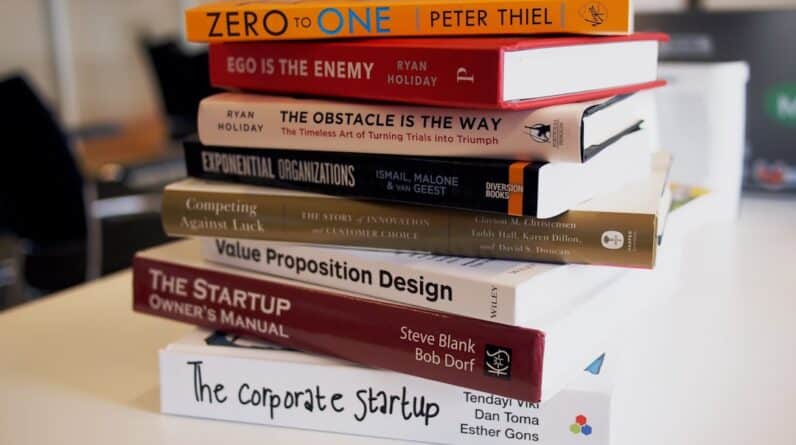
Preparing for your next academic endeavor in downtown McKinney? You might be gazing at syllabi, feeling a pang of apprehension about the sheer volume of required reading. Perhaps you’re finding it challenging to retain information, or maybe the dense prose of scholarly articles feels like an insurmountable hurdle. This guide is designed to equip you with practical strategies to navigate the demands of academic reading, specifically with a focus on resources and an atmosphere conducive to improvement right here in downtown McKinney. Your journey to becoming a more proficient academic reader starts with a targeted approach, and the solutions you need might be closer than you think.
Before diving into improvement strategies, it’s crucial to identify the specific obstacles you face. Academic reading isn’t a monolithic skill; it’s a collection of abilities that can be individually strengthened. Recognizing these specific pain points will allow you to tailor your approach for maximum effectiveness.
Identifying Common Reading Difficulties
- Pace: Do you find yourself staring at the same paragraph for ten minutes, feeling like you’re not making progress? Slow reading can be a significant impediment to completing assignments on time and absorbing material comprehensively. This often stems from a lack of fluency, a tendency to subvocalize excessively, or an inability to identify the main points quickly.
- Comprehension: Even if you get through the words, do you find yourself struggling to grasp the author’s argument? Are you able to summarize the key takeaways, or do you feel lost in the details? Low comprehension can be caused by unfamiliar vocabulary, complex sentence structures, or a failure to connect ideas within the text.
- Retention: After reading a chapter or an article, can you recall the essential information a day or a week later? Poor retention suggests that the information is not being processed deeply enough or that you’re not employing active recall techniques.
- Focus and Concentration: Is your mind wandering after a few pages? The academic environment, both in and out of the classroom, can be filled with distractions. Maintaining sustained focus on a challenging text is a skill that needs to be cultivated.
- Vocabulary: Encountering a high frequency of unfamiliar terms can grind your reading to a halt. Without a robust academic vocabulary, many sources become inaccessible.
The Role of Text Complexity
Academic texts, by their very nature, are often more complex than everyday prose. They introduce specialized jargon, employ intricate argumentation, and assume a certain level of prior knowledge. Understanding this inherent complexity is the first step in approaching these texts strategically rather than with trepidation.
Self-Assessment and Goal Setting
Before you even step into a local library or bookstore, take a moment for honest self-assessment. What specific texts are you struggling with? Are there particular subjects that present greater reading challenges? Setting clear, measurable, achievable, relevant, and time-bound (SMART) goals will provide direction and motivation. For instance, instead of “read better,” aim for “increase my reading speed by 15% on assigned history readings within the next month.”
Cultivating an Effective Reading Environment Downtown McKinney
Your physical surroundings can significantly impact your ability to concentrate and absorb information. Downtown McKinney offers several locations that can provide a more conducive atmosphere for academic reading than your potentially distracting home environment.
The Public Library: A Central Hub
Your local public library is an invaluable resource, and the Heard-Craig Genealogy Library and the McKinney Public Library, while offering different focuses, both provide quiet spaces for study.
- Dedicated Study Spaces: Look for areas within the library specifically designated for quiet study. These are often equipped with comfortable seating and good lighting, minimizing external disturbances.
- Access to Resources: Beyond books, libraries often offer access to academic databases, journals, and other scholarly materials, which can be crucial for your research and understanding.
- Reduced Distractions: Compared to the constant notifications and interruptions of home, a library environment is deliberately curated for concentration.
Coffee Shops and Cafes
While not as silent as a library, certain downtown McKinney coffee shops can offer a pleasant background hum of activity that some individuals find aids focus.
- Balancing Ambiance and Focus: Choose establishments known for a more relaxed atmosphere. Avoid places with loud music or constant bustling. The idea is a gentle ambient noise, not a distraction.
- Strategic Seating: Opt for a table away from the counter or high-traffic areas. Window seats can offer a pleasant view, but ensure they don’t become a visual distraction themselves.
- Mindful Consumption: While a coffee or snack can be a welcome accompaniment, be mindful of how it impacts your concentration. Excessive amounts might lead to jitters or a post-sugar slump.
University or College Libraries (if applicable)
If you are affiliated with a local college or university, their library system is undoubtedly your most comprehensive academic resource.
- Specialized Collections: University libraries house vast collections tailored to specific academic disciplines. This means a higher chance of finding primary sources and specialized secondary literature relevant to your studies.
- Study Rooms and Technology: Many university libraries offer bookable study rooms, often equipped with whiteboards, projectors, and reliable internet access, which can be beneficial for collaborative study or in-depth analysis.
- Librarian Assistance: University librarians are trained to assist students with research and information literacy. They can be invaluable in navigating complex databases and finding obscure materials.
Creating Your Personal Reading Sanctuary
Even if you utilize public spaces, establishing personal routines and habits that signal “reading time” can enhance your focus regardless of location. This includes putting away your phone and establishing clear study periods.
Developing Active Reading Strategies
Passive reading, simply scanning words on a page, is largely ineffective for academic purposes. Active reading involves engaging with the text critically, questioning its content, and making connections.
Pre-Reading Techniques
Before you even begin reading a chapter or article, invest a few minutes in preparing yourself.
- Previewing the Text: Skim the headings, subheadings, introduction, conclusion, and any abstracts or summaries. This gives you a mental roadmap of the content.
- Identifying the Purpose: Ask yourself: “What is the author trying to achieve with this text?” Are they trying to inform, persuade, analyze, or critique? Understanding the author’s purpose will help you interpret their arguments more effectively.
- Activating Prior Knowledge: What do you already know about this topic? Briefly jotting down existing knowledge can help you connect new information to what you already understand.
- Formulating Questions: Based on your preview, what questions do you have about the topic? Writing these down will help you read with a purpose, actively seeking answers.
During-Reading Engagement
This is where the real work of active reading happens.
- Annotating and Note-Taking: Underline key sentences, highlight important terms, write summaries in the margins, and note any questions or connections you make. This makes the text a dynamic object of study, not just a passive recipient of your gaze.
- Marginal Notes: Use the margins to summarize paragraphs, define unfamiliar terms, or pose critical questions.
- Highlighting Effectively: Avoid over-highlighting. Focus on main ideas, supporting evidence, and critical arguments.
- Connecting Ideas: Use symbols or short phrases to link related concepts within the text or to other texts you’ve read.
- Questioning the Text: Engage in a dialogue with the author.
- “What evidence does the author provide for this claim?”
- “Are there any biases or assumptions present?”
- “How does this information relate to other concepts I’ve learned?”
- “What are the limitations of this argument?”
- Summarizing and Synthesizing: Regularly pause to summarize what you’ve read in your own words. This forces you to process the information and identify the core arguments.
- Paragraph Summaries: After each paragraph or section, write a brief summary to ensure comprehension.
- Thematic Summaries: As you progress, try to identify overarching themes and how different sections contribute to them.
- Identifying the Author’s Argument and Evidence: Academic texts are built on arguments supported by evidence. Learn to distinguish between the claim (what the author wants you to believe) and the evidence (the information used to support that claim).
Post-Reading Consolidation
Your reading journey doesn’t end when you close the book.
- Reviewing Notes: Go back over your annotations and notes. This helps reinforce the material and identify any gaps in your understanding.
- Creating Outlines or Concept Maps: Visually organizing the information can reveal relationships between ideas and solidify your grasp of the material.
- Hierarchical Outlines: Structure information from broadest to most specific.
- Concept Maps: Use nodes and connecting lines to illustrate relationships and connections between ideas.
- Teaching the Material: Explaining the content to someone else (or even just imagining you are) is an excellent way to test your understanding and identify areas where you might be weak.
- Connecting to Broader Concepts: How does this reading fit into the larger context of the course or your field of study?
Mastering Academic Vocabulary and Comprehension
The language of academia can be a barrier to understanding. Proactively building your vocabulary and employing strategies to decode complex sentence structures are essential.
Strategies for Vocabulary Acquisition
- Contextual Clues: When you encounter an unfamiliar word, try to deduce its meaning from the surrounding text. This is a fundamental skill for any reader.
- Dedicated Vocabulary Journals: Keep a notebook or a digital list of new academic words you encounter.
- Definition and Example: For each word, write its definition and an example sentence, ideally one from the text or a sentence you create yourself.
- Etymology (Roots and Affixes): Understanding word origins can help you decipher the meaning of new words and remember them more easily.
- Utilizing a Thesaurus and Dictionary: Don’t be afraid to look up words. The Merriam-Webster Collegiate Dictionary, available at the library or online, is a reliable resource.
- Active Recall: Regularly test yourself on the vocabulary you’ve learned. Flashcards (physical or digital) can be very effective.
Deconstructing Complex Sentences
Academic writing often features long, complex sentences with multiple clauses.
- Identifying the Subject and Verb: For each sentence, pinpoint the main subject and verb. This will help you identify the core action or statement being made.
- Breaking Down Clauses: Look for conjunctions (and, but, or) and subordinating conjunctions (because, although, since) that connect different parts of the sentence.
- Rearranging Sentence Structure: Mentally (or by rewriting) rearrange the sentence to a simpler structure to grasp its meaning.
- Focusing on Keywords: Identify the most important nouns, verbs, and adjectives that carry the primary meaning.
Improving Reading Through Practice and Persistence
- Gradual Progression: Start with texts that are slightly above your current reading comfort level and gradually increase the difficulty.
- Reading Diverse Genres: Expose yourself to various academic disciplines and writing styles. This broadens your exposure to different vocabulary and argumentative structures.
- Regular Reading Habits: Consistency is key. Aim to read for a set amount of time each day, even if it’s just 15-30 minutes.
Leveraging Downtown McKinney’s Resources for Reading Improvement
| Category | Metrics |
|---|---|
| Number of Students | 150 |
| Reading Level Improvement | 2 grade levels |
| Attendance Rate | 95% |
| Parent Involvement | 80% |
Downtown McKinney offers tangible resources that can directly support your academic reading development. Beyond the general suggestions, consider how specific local offerings can be integrated into your strategy.
Educational Workshops and Tutoring Services
While there might not be a dedicated “Academic Reading Improvement Center” downtown, keep an eye on local community college extensions or adult education programs.
- Community Workshops: Check the schedules for the McKinney Public Library or any local educational institutions for workshops on study skills, critical thinking, or research methods. These can provide structured guidance.
- Tutor Referrals: If you’re struggling significantly, inquire at the library or educational centers about potential tutors who specialize in academic support. While they may not be downtown, they could be accessible.
Bookstore Resources and Recommendations
Local bookstores, such as The Local Bookstore, can be more than just places to buy books.
- Curated Selections: Browse their shelves for popular academic texts or sections dedicated to study skills and critical thinking.
- Librarian or Bookseller Advice: Engage with the staff. They often have a good understanding of popular academic titles and can offer recommendations for supplementary reading on reading strategies. While they aren’t academic librarians, their knowledge of literature can be a valuable starting point.
Study Groups and Peer Support
Forming or joining a study group can provide a supportive network for tackling challenging readings.
- Collaborative Discussion: Discussing assigned readings with peers can illuminate different interpretations and clarify confusing points.
- Shared Accountability: Committing to reading beforehand for a group discussion provides an external motivator to stay on track.
- Local Meeting Spots: Utilize the quiet zones of the library or a reserved table in a quieter coffee shop within downtown McKinney as your group’s meeting place.
Utilizing Digital Resources Accessible Locally
Even if the physical resource is not downtown, the access and infrastructure are.
- Online Academic Databases: Through your institution or the public library, you have access to a wealth of online academic journals and articles. Learn to navigate these effectively.
- Digital Reading Tools: Explore digital annotation tools, text-to-speech software, or vocabulary-building apps. These can be used anywhere, but access to reliable internet is essential, which is readily available downtown.
By actively seeking out and utilizing the resources available in and around downtown McKinney, you can transform your academic reading from a passive chore into an active, rewarding, and ultimately successful process. Your commitment to improvement, coupled with the right environment and strategies, will pave the way for greater academic achievement.
FAQs
What is Academic Reading Improvement Downtown Mckinney?
Academic Reading Improvement Downtown Mckinney is a program designed to help students improve their reading skills in an academic setting. It is located in downtown McKinney and offers various resources and support for students looking to enhance their reading abilities.
Who can benefit from Academic Reading Improvement Downtown Mckinney?
The program is open to students of all ages and academic levels who are looking to improve their reading skills. Whether it’s elementary school students struggling with reading comprehension or college students looking to enhance their academic reading abilities, the program offers tailored support for each individual.
What resources are available at Academic Reading Improvement Downtown Mckinney?
The program offers a range of resources including one-on-one tutoring, group workshops, reading materials, and access to educational technology. The resources are designed to cater to the specific needs of each student and help them develop effective reading strategies.
How can one enroll in Academic Reading Improvement Downtown Mckinney?
Interested individuals can enroll in the program by contacting the center directly. They can inquire about the enrollment process, schedule a consultation, and discuss their specific reading improvement goals with the program coordinators.
What are the benefits of participating in Academic Reading Improvement Downtown Mckinney?
Participating in the program can lead to improved reading comprehension, enhanced academic performance, increased confidence in reading abilities, and the development of effective reading strategies that can be applied across various academic disciplines.