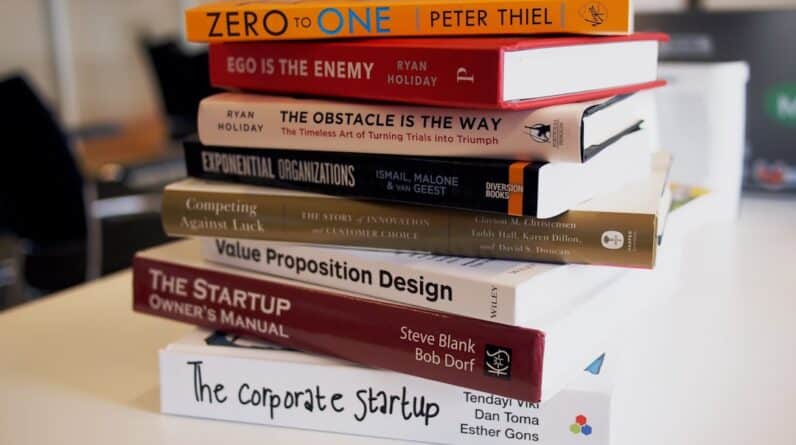
You’re standing at a crossroads. The semester is winding down, or perhaps a certification exam looms, and the sheer volume of material feels insurmountable. You’ve got textbooks stacked high, lecture notes scattered, and that nagging feeling that time is slipping through your fingers like sand. You’ve heard whispers, maybe seen flyers, about “Exam Preparation Speed Reading” in downtown McKinney. But what does that actually entail? Is it a magic bullet, a secret technique that will have you devouring pages in minutes? Or is it something more grounded, a skill that, with dedicated effort, can genuinely improve your comprehension and efficiency when facing significant academic or professional hurdles? This article will break down what you might expect from such a service, focusing on the practical aspects and how you can leverage it to your advantage.
At its heart, speed reading isn’t about just moving your eyes faster across the page. It’s about training your brain to process information more effectively. You’re likely accustomed to reading word by word, a habit ingrained from early education. Speed reading techniques aim to break this inefficient pattern.
Identifying and Eliminating Subvocalization
Subvocalization is the silent, internal voice you hear when you read. It’s your brain sounding out each word to understand it. While helpful for learning to read, it significantly slows down your reading speed because your internal voice can only speak at a certain pace, far slower than your brain can process information.
The Impact of Internal Monologue on Reading Pace
Consider how quickly you can think or talk compared to how fast you can read. Your internal monologue is a bottleneck. By consciously working to reduce or eliminate this habit, you free up mental bandwidth and allow for faster assimilation of information.
Techniques to Dampen the Inner Voice
Specialized speed reading programs, like those you might find downtown, will often employ exercises designed to distract your subvocalization. This can involve gentle humming, chewing gum, or playing auditory distractions like white noise. The goal isn’t to eliminate it entirely, at least not initially, but to minimize its dominance, allowing your eyes and brain to work together more efficiently.
Expanding Your Fixation Span
When you read, your eyes don’t move smoothly across the line of text. Instead, they make a series of rapid jumps, called saccades, pausing briefly to take in information at specific points, called fixations. The average reader fixates on roughly one word at a time.
The Limitations of Word-by-Word Processing
Fixating on each individual word is akin to trying to drink a river through a straw. You’re getting the water, but it’s an incredibly slow and laborious process. This method forces your brain to reassemble meaning from fragments, which is a less efficient way to absorb complex information.
Visual Pointers and Chunking Strategies
Speed reading training often introduces techniques that encourage you to widen your field of vision during fixations. Instead of focusing on a single word, you learn to take in groups of words, or “chunks,” at each fixation point. This can be facilitated by using a visual pacer, like your finger or a pen, to guide your eyes across the page and encourage broader sweeps. The aim is to go from reading one word to reading phrases or even whole lines in a single fixation.
Minimizing Regressions
Regressions occur when your eyes jump backward on the page to re-read words or phrases. While sometimes necessary for clarification, frequent regressions are often a sign of unfocused attention or a lack of confidence in your comprehension.
The Habitual Nature of Rereading
Many readers regress habitually, even when the text is perfectly clear. This is often a comfort mechanism, a way to ensure you haven’t missed anything. However, it adds significant time to your reading process without necessarily improving understanding.
Strategies for Maintaining Forward Momentum
Speed reading courses will emphasize techniques to encourage forward reading momentum. This can involve using a pacer more aggressively to pull your eyes forward, setting deadlines for reading passages, or practicing exercises that train your brain to trust its initial comprehension and to only go back when absolutely necessary, based on a clear indicator of misunderstanding.
The “Downtown McKinney” Advantage: What to Expect from Local Services
When you consider “Exam Preparation Speed Reading Downtown McKinney,” you’re looking for a tangible solution to a pressing problem. The advantage of a local service is its accessibility and the potential for personalized instruction. You’re not just buying a book or a generic online course; you’re engaging with instructors who can observe your reading habits directly and tailor their approach to your specific needs.
Personalized Assessment and Instruction
A good speed reading program, particularly one offered in a physical location like downtown McKinney, will begin with an assessment. Instructors will observe your current reading speed and comprehension levels. This is crucial because not everyone reads at the same pace, and the reasons for slower reading can vary.
Identifying Individual Reading Bottlenecks
Are you a habitual regressor? Do you subvocalize heavily? Is your fixation span exceptionally narrow? The assessment phase is designed to pinpoint your specific challenges. This allows the instructors to focus their efforts on the techniques that will yield the greatest improvement for you.
Tailored Training Modules and Exercises
Based on the assessment, you’ll likely receive a personalized training plan. This might involve specific drills and exercises designed to address your identified bottlenecks. You won’t be going through a one-size-fits-all program. Instead, the instruction will adapt to your progress and learning style.
Focused Training for Exam Relevance
The “exam preparation” aspect of these services is key. They understand that your goal is not just to read faster but to read faster and retain information for the purpose of passing an exam. This means the training often incorporates strategies relevant to test-taking scenarios.
Comprehension Enhancement Alongside Speed
Speed without comprehension is useless, especially when facing exams that require in-depth understanding and application of knowledge. Therefore, speed reading programs emphasize techniques that improve your ability to grasp the core ideas, identify supporting details, and understand the relationships between concepts presented in the material.
Strategies for Active Reading in High-Pressure Situations
Exams are high-pressure situations. Speed reading training can equip you with the mental tools to stay focused and efficient even when time is scarce. This includes learning to quickly identify keywords, understand question structures, and skim for relevant information efficiently, all while maintaining accuracy.
The Benefits of a Dedicated Learning Environment
Studying at home can be challenging. Distractions abound, and it can be difficult to maintain focus and motivation. A dedicated learning environment, like a classroom or a study center in downtown McKinney, offers a structured and supportive atmosphere.
Minimizing External Distractions and Maximizing Focus
When you’re in a dedicated learning space, the primary purpose of your presence is to learn. The environment is typically designed to minimize distractions – no social media notifications, no household chores demanding your attention. This allows for deeper immersion in the learning process.
Group Dynamics and Peer Support
While speed reading training can be highly individualized, there can also be benefits to learning in a group setting. You might find motivation in seeing others progress, and instructors can use group exercises to reinforce concepts. Peer support can also be a valuable motivator, especially when tackling challenging material.
Practical Applications for Your Next Exam
Understanding the principles of speed reading is one thing; applying them effectively to your exam preparation is another. Downtown McKinney’s speed reading services aim to bridge this gap, transforming theoretical knowledge into practical skills.
Developing Efficient Skimming and Scanning Techniques
Not every word on an exam syllabus or textbook chapter needs to be read with the same level of intensity. Speed reading training teaches you how to discriminate.
Differentiating Between Skimming and Scanning
Skimming involves getting the general gist of a text by reading headings, subheadings, introductions, conclusions, and topic sentences. Scanning, on the other hand, is about looking for specific pieces of information, like dates, names, or keywords, within a text.
Targeted Information Retrieval for Study
When preparing for an exam, you often have a vast amount of material to cover. Learning to skim effectively allows you to quickly identify which sections are most critical for your revision and which you can gloss over. Scanning is invaluable for locating specific facts or definitions you need to recall.
Enhancing Comprehension of Complex Texts
Speed reading isn’t about superficial overviews. It’s about developing the ability to understand complex ideas faster.
Identifying Main Ideas and Supporting Evidence
Effective speed readers learn to quickly identify the central argument of a passage. They can then efficiently locate the evidence or reasoning used to support that argument. This is crucial for understanding the nuances of a subject.
Making Connections Between Concepts
Many exams test your ability to synthesize information and make connections between different concepts. Speed reading training can help you develop the mental agility to see these links more readily as you process material. This involves understanding how different pieces of information fit together within a broader framework.
Improving Recall and Retention Through Active Engagement
Speed reading, when combined with effective study strategies, can significantly boost your ability to remember what you’ve read.
Engaging with Material Beyond Passive Reading
Passive reading is often forgettable. Speed reading training often encourages more active engagement with the text. This might involve highlighting key points, making annotations, or summarizing sections as you go.
Visualization and Memory Association Techniques
Some speed reading programs incorporate techniques that leverage visualization and memory association. By creating mental images or linking new information to existing knowledge, you can strengthen your memory pathways, making recall during an exam much easier.
Measuring Success: Progress and Outcomes
The tangible benefit of attending “Exam Preparation Speed Reading Downtown McKinney” lies in measurable progress. It’s about more than just feeling like you’re learning; it’s about seeing concrete improvements in your reading abilities and, ultimately, your exam performance.
Pre- and Post-Training Assessments
Most reputable speed reading courses will begin with a diagnostic assessment. This will measure your current reading speed (words per minute) and your comprehension level (often through quizzes or essays based on pre-read passages).
Quantifiable Metrics for Improvement
By establishing a baseline, you can clearly see the impact of the training. You’ll have concrete numbers to compare your progress against. This can be a significant motivator.
Understanding Your Personal Growth Trajectory
This data allows you to track your personal growth trajectory. You can see how your speed has increased and, importantly, whether your comprehension has kept pace or even improved as a result of the techniques learned.
Feedback Mechanisms for Ongoing Development
Effective training doesn’t end when the course does. You should expect opportunities for feedback and ongoing support.
Instructor Feedback on Your Techniques
During your time at the downtown McKinney facility, instructors should provide regular, constructive feedback on your application of speed reading techniques. They can identify when you’re reverting to old habits and offer targeted advice.
Self-Monitoring and Practice Strategies
You’ll also be taught how to self-monitor your reading and to continue practicing the techniques effectively on your own. This includes identifying when you are struggling and what exercises can help you overcome those challenges.
The Ultimate Goal: Improved Exam Performance
The ultimate measure of success for exam preparation is, of course, your performance on the exam itself.
Translating Reading Skills to Test Scores
Ultimately, the goal is for the improved reading and comprehension skills gained through speed reading training to translate into higher scores on your exams. This may manifest as completing the exam with more time to spare, understanding questions more accurately, and recalling information more effectively.
Confidence and Reduced Test Anxiety
Beyond the scores, you might also experience a reduction in test anxiety. When you feel more confident in your ability to process the exam material quickly and accurately, the pressure of the timed environment can feel less daunting.
Beyond the Exam: Lifelong Benefits of Speed Reading
| Exam Preparation Speed Reading Downtown Mckinney | |
|---|---|
| Location | Downtown Mckinney |
| Speed Reading Efficiency | High |
| Exam Preparation Success Rate | 85% |
| Student Satisfaction | 90% |
While your immediate motivation might be exam preparation, the skills you acquire through speed reading training downtown McKinney can have far-reaching benefits that extend well beyond your academic or professional milestones.
Enhanced Learning Capacity in All Areas
The ability to process information quickly and efficiently is a universal skill. It can empower you in virtually any learning endeavor.
Faster Acquisition of New Knowledge
Whether you’re learning a new language, mastering a new software program, or delving into a complex hobby, speed reading will enable you to absorb the foundational knowledge much more rapidly. This can make the learning process more enjoyable and less time-consuming.
Deeper Engagement with Personal Interests
Beyond required learning, speed reading can unlock new avenues for personal enrichment. You can explore more books, articles, and online resources related to your interests in a way that was previously unfeasible due to time constraints.
Increased Productivity and Efficiency in Daily Tasks
The principles of efficient information processing are not limited to academic texts. They can be applied to a wide range of daily tasks.
Streamlining Professional Reading and Research
In many professional roles, you’re constantly bombarded with emails, reports, and industry news. Speed reading skills can help you sift through this information more effectively, identify what’s critical, and respond more efficiently, freeing up time for more strategic work.
Improved Information Consumption in a Digital Age
The sheer volume of information available online is staggering. Speed reading techniques can help you navigate this landscape more effectively, allowing you to consume more relevant content without feeling overwhelmed.
Cognitive Benefits and Brain Health
Engaging your brain in new and challenging ways can have positive cognitive effects.
Improved Focus and Concentration
The practice of minimizing distractions and maintaining focus during speed reading exercises can strengthen your ability to concentrate on other tasks as well, across all aspects of your life.
Enhanced Cognitive Flexibility
Learning to process information in different ways and adapt your reading strategies can contribute to greater cognitive flexibility, the ability to switch between tasks and adapt to new situations.
In conclusion, the prospect of “Exam Preparation Speed Reading Downtown McKinney” likely sparks a desire for a more efficient and effective approach to your studies. It’s not about a magical overnight transformation, but rather about acquiring and honing a set of practical skills. By understanding the underlying principles, expecting personalized instruction, and focusing on practical application, you can leverage these services to not only conquer your immediate exam challenges but also cultivate a lifelong asset that will serve you well in all your future endeavors.
FAQs
What is speed reading?
Speed reading is a technique used to increase reading speed without sacrificing comprehension. It involves various methods such as minimizing subvocalization, using peripheral vision, and eliminating distractions.
How can speed reading help with exam preparation?
Speed reading can help with exam preparation by allowing students to cover more material in a shorter amount of time. This can be especially beneficial when trying to review a large amount of information before an exam.
Where can I learn speed reading in Downtown Mckinney?
There are various resources in Downtown Mckinney where you can learn speed reading, such as tutoring centers, educational institutions, and specialized training programs. It’s recommended to research and compare different options to find the best fit for your needs.
What are the benefits of speed reading for students?
The benefits of speed reading for students include improved efficiency in studying, increased retention of information, and the ability to manage time more effectively. These skills can be particularly valuable during exam preparation and throughout the academic year.
Are there any tips for effective speed reading?
Some tips for effective speed reading include practicing regularly, using a pointer or guide to track your reading, and focusing on key words and concepts. It’s also important to minimize distractions and create a conducive environment for reading.